
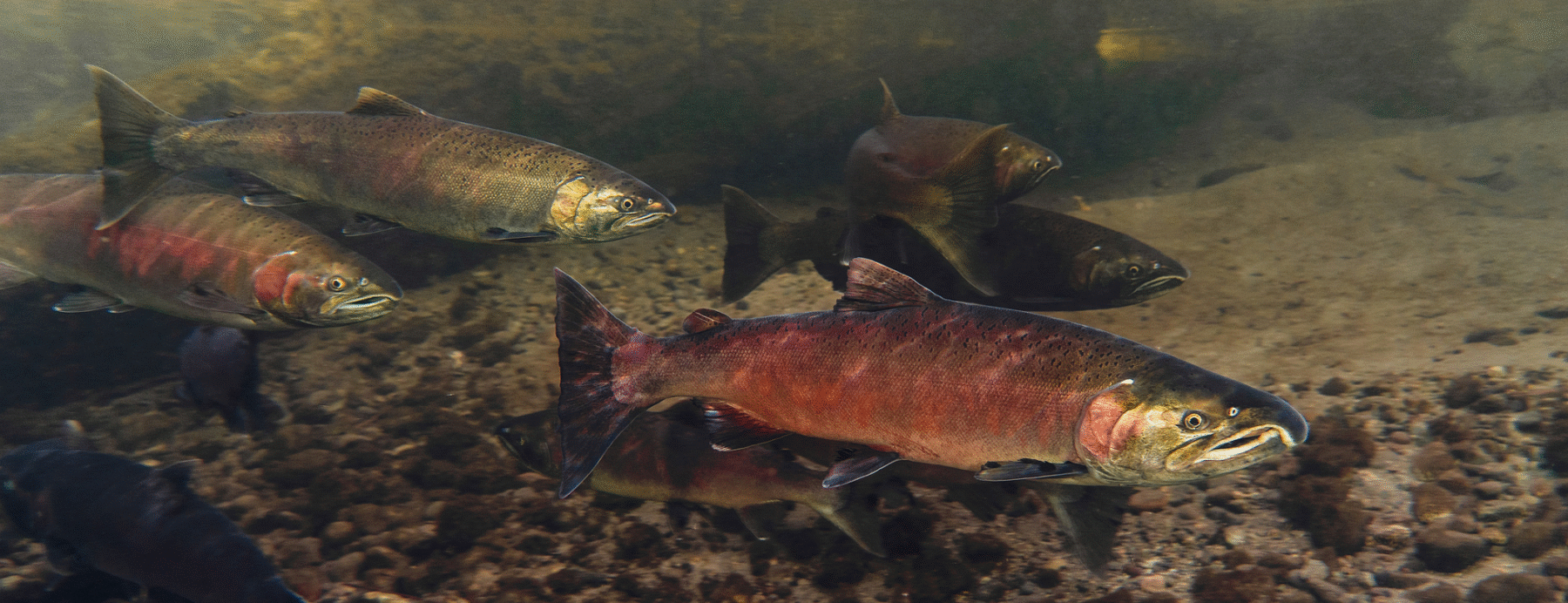
What are the different types of salmon?
No doubt the salmon is a preferred seafood dish. But there is not just one type. Buying salmon can be quite complex when factoring in seasonality, catch areas, species, regulations and logistics.
From time to time we get an email inquiry asking for salmon. It goes something like this “we would like to import salmon, please quote us.” To the person asking it seems like a simple request. To the seafood trader at Smokey Bay it is akin to asking how long is a piece of string.
Some initial information is needed.
Would you like:
Fresh or Frozen?
Farmed or wild caught?
What is the application? Further processing, foodservice or retail?
Head off gutted, fillet, or head on/dressed?
What species would you like?
For texture do you want more fat content, or firmer flesh?
Meat color, dark red, orange, pink, pale?
Are you wanting a seasonal/fresh program, or year round supply?
These questions will help guide identification.
No doubt the salmon is a preferred seafood dish. But there is not just one type. Buying salmon can be quite complex when factoring in seasonality, catch areas, species, regulations and logistics.
Though there are similarities between species, there are five different types. With differences in size, flesh color, texture, taste, and application from canning, filleting or whole fish barbeque.
This link will take you to a handy reference guide on salmon species
https://www.pac.dfo-mpo.gc.ca/fm-gp/rec/identify-identifier-eng.html
https://www.bcsalmon.ca/five-species
Types of salmon

King Salmon or Chinook Salmon
The king salmon is the biggest species of the salmon family, typically graded at 18 lbs per fish. It is has the richest amount of omega 3, it has delicious flavor, but is less pronounced that the sockeye salmon. Because of its fatty content, it has a rather luxurious texture, the meat color goes from white to pink or a deep red. Typically sold fresh.
- Flesh Colour: Deep-red to ivory colour lightens slightly when cooked
- Flavour: Rich and full
- Texture: Moderately firm with larger flakes Flesh
- Suggested Cooking Methods:
- Bake
- Broil
- Grill
- Poach
Sockeye Salmon
The Sockeye salmon typically graded 2 to 4lbs and 4 to 6lbs per HG fish has the richest flavor of the salmon’s family, and has the firmest texture, and most intense red color, and has a smaller flake than the king salmon. Typically sold frozen.
- Flesh Colour: Deep red to orange red colour is maintained when cooked
- Flavour: Rich and full
- Texture: Firm with tighter flakes
- Suggested Cooking Methods:
- Bake
- Broil
- Grill
- Poach
Coho Salmon
The coho salmon has bright red color in the meat and has a softer texture than the chinook, but has a rather similar flavor to the king salmon. Average commercial weight is 4 to 12 lbs. Typically sold fresh.
- Flesh Colour: Vibrant reddish-orange colour is maintained when cooked
- Flavour: Moderately full and versatile
- Texture: Firm and fine textured
- Suggested Cooking Methods:
- Bake
- Broil
- Grill
- Poach
- Sauté
Pink Salmon
This salmon also known as humpbacks or humpies, because of the hump that they develop when they are spawning, is the smallest salmon of the wild species of the pacific, has a milder flavor than other salmon, and a softer texture with a small flake and a lower content of fats. Typically sold for canning, or bags for value retail.
- Flesh Colour: Light rose-pink colour lightens slightly when cooked
- Flavour: Mild and delicate
- Texture: Softer
- Suggested Cooking Methods:
- Bake
- Broil
- Poach
Chum Salmon
This salmon is underrated, and considered with Pinks as the lower grade salmon, for smoking, or value portions at retail or further processing such as for curry and chowder recipes. Its average commercial size is about 8 lbs.
Chum is caught late season in the river or close to the mouth, and depending on its stage in annual upriver migration can get pretty beat up. Therefore depending on quality, chum’s price may be heavily discounted.
Its flavor is milder than the chinook and sockeye, and has less oils, making the meat texture softer than sockeye salmon or king salmon and meat color light pink or orange.
- Flesh Colour: Reddish-pink. Becomes paler as fish migrates upstream
- Flavour: Milder and more delicate
- Texture: Firm and can be drier
- Suggested Cooking Methods:
- Bake
- Broil
- Grill
- Poach
- Sauté
- Steam
Atlantic salmon
This fish is the primary farmed fish species on both the Pacific and Atlantic Coast. It is one success story of the modern aquaculture techniques, the flavor is milder than the wild varieties of the pacific, the meat is fatty and oily but not as fatty than the Chinook salmon. the meat color varies depending of the amount of pigment of the feed, but normally goes from a rich orange color to a pinkish orange color, and has a large flake. Typically sold fresh.
- Flesh Colour: from light pink to deep orange
- Check the salmon colour wheel here: The SalmoFan™ color measurement tools
- Flavour: buttery and rich
- Texture: moist and medium flake
- Suggested Cooking Methods:
- Bake
- Broil
- Grill
- Poach
- Sauté
The legend of Wountie, of the Squamish Nation
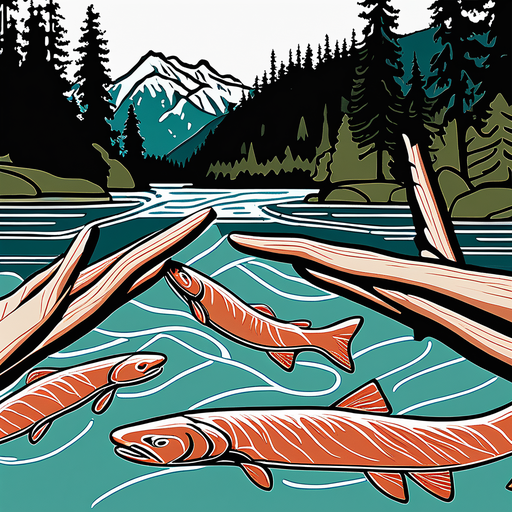
A long time ago, even before the time of the flood, the Cheakamus River provided food for the Squamish people. Each year, at the end of summer, when the salmon came home to spawn, the people would cast their cedar root nets into the water and get enough fish for the winter to come.
One day, a man came to fish for food for his family for the winter. He looked into the river and found that many fish were coming home this year. He said thanks to the spirit of the fish, for giving themselves as food for his family, and cast his net into the river and waited. In time, he drew his nets in, and they were full of fish, enough for his family for the whole year. He packed these away into cedar bark baskets and prepared to go home.
But he looked into the river, and saw all those fish, and decided to cast his net again. And he did so, and it again filled with fish, which he threw onto the shore. A third time, he cast his net into the water and waited.
This time, when he pulled his net in, it was torn beyond repair by sticks, stumps and branches which filled the net. To his dismay, the fish on the shore and the fish in the cedar bark baskets were also sticks and branches. He had no fish; his nets were ruined.
It was then he looked up at the mountain, and saw Wountie, the spirit protecting the Cheakamus, who told him that he had broken the faith with the river and with nature, by taking more than he needed for himself and his family. And this was the consequence.
And to this day, high on the mountain overlooking the Cheakamus and Paradise Valley, is the image of Wountie, protecting the Cheakamus.
The fisherman? Well, his family went hungry and starved, a lesson for all the people in his family. (StoneE Producktions, s.f.)
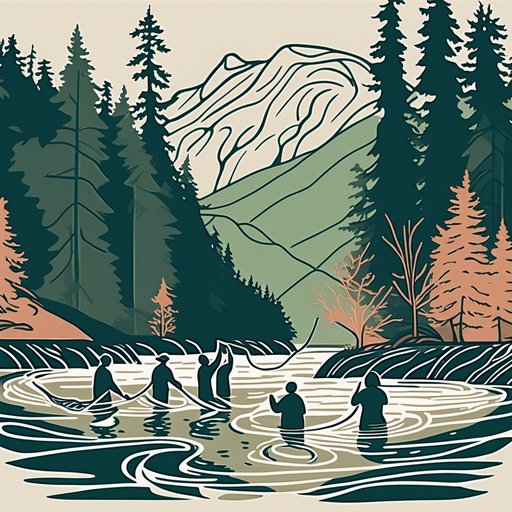
Salmon has impacted the culture of many people. Like the connection between the Squamish, and the salmon. As this story teaches us the importance of having a sustainable relationship with nature, Smokey Bay follows this principle.
StoneE Producktions. (s.f.). Native Lore: The Legend of Wountie. Recuperado el 4 de November de 2020, de Native American Lore: Retrieved on November 4, 2020, from Native American Lore:
http://www.ilhawaii.net/~stony/lore15.html

Patrick Warren is the founder of Smokey Bay Seafood Group, which has been in continuous operation since 1998. He has extensive experience in the seafood industry, including work in both shellfish aquaculture – manila clam, pacific oysters, and wild fisheries such as dungeness crab, geoduck, wild salmon, and crustaceans. He has developed long lasting export programs to Asia, Europe, and North America. Patrick’s career also includes collaborative projects with tribal and First Nations communities and expertise in aquaculture feeds such as krill and algae production. He holds a postgraduate degree in geography and environmental planning. Additionally, Patrick is the majority shareholder of Sebastian Stuart LLC a legacy dock and pier in Anacortes, Washington, and the founder of Eldorado Square in New Denver, BC. He also served as Park Board Commissioner for Vancouver, BC at a time that significant decisions were made for the city’s parks, aquarium, sea wall, and community centers.